Staphlococcus aureus-bacteria which causes skin infection and some lung infection.
Those who are affected by this bacteria can be treated by an antibiotic known as methecilline.
This antibiotic kills the staphlococcus aureus.
The type of staphlococcus aureus which can be killed by the antibiotic are known as susceptible form (mssa)
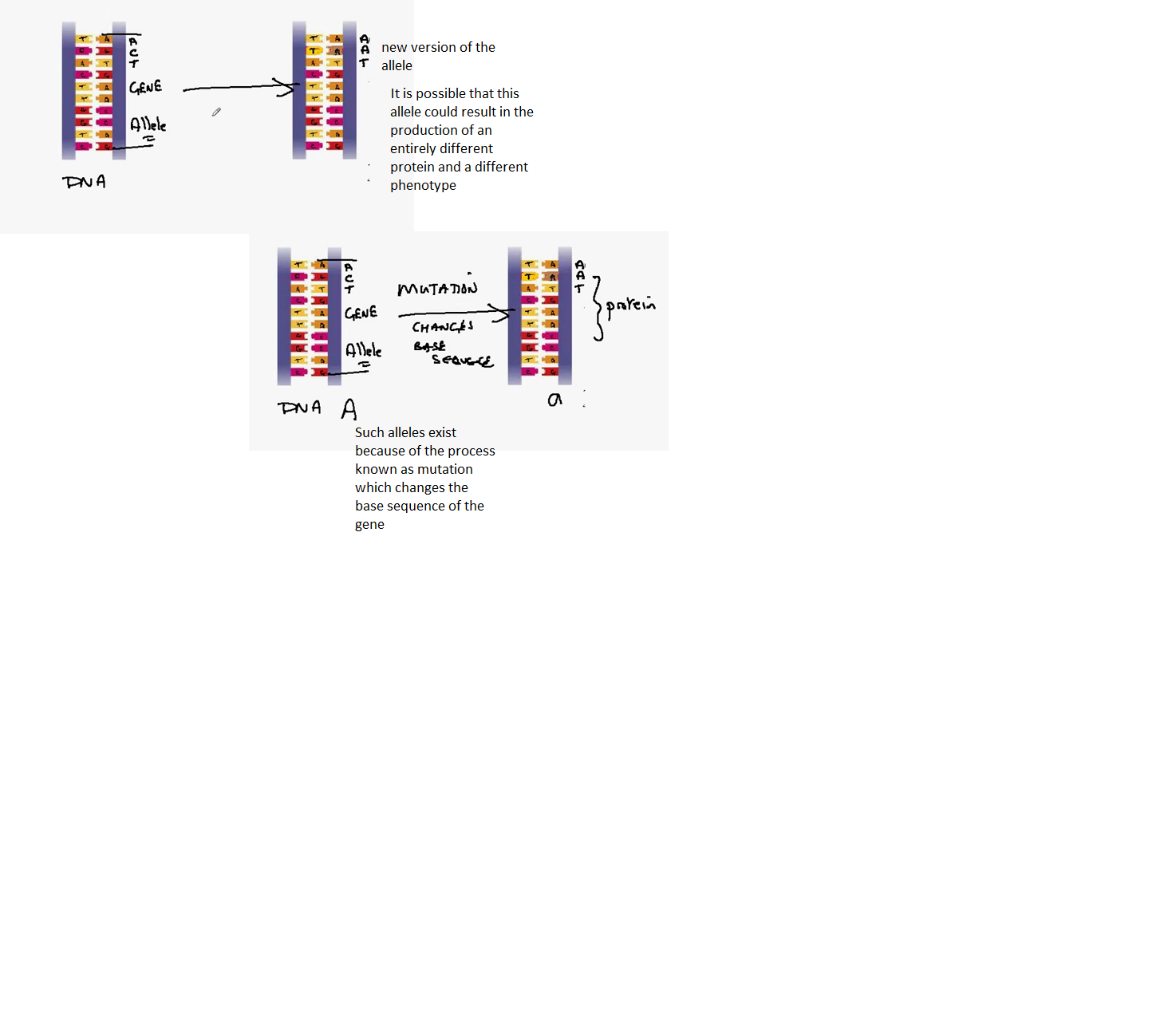
When a random mutation occurs within the genome of the staphlococcus aureus, the methecilline fails to kill it. This form is known as the resistant form of staphlococcus aureus. (mrsa)
The mutation has created genes within the bacteria has allowed it to break down the antibiotic.
Variations- differences we can see in the phenotypes of each individual.
It is possible to count/measure these differences and show them through graphs.
The phenotype depends on the genotype of each individual which is modified according to the environment.
Variation in population is a variation within all these individuals.
The difference in appearance within different species occur because all those individuals have different genotypes and they survive in different environments.
Phenotypic variation in a population or species is due to environmental variation. E.g. the home language you speak.
The parent phenotype is red petal crossed with red petal
The parent genotype- Rr x Rr
Both parents are heterozygous.
Meiosis takes place and the allele has to be separated, one into each type of gamete.
In this case, there is a 50% chance that the pollen grain is carrying a R allele and there's a 50% chance that the pollen grain is carrying an r allele.
Random fertilization occurs, as shown in the table, to be observed in the image.
The probabilities depend on which pollen grain (R or r) fertilizes with which ovule (R or r)
We're predicting the probabilities of offspring through monohybrid crosses.
Monohybrid crossing- crossing which consists of only one gene.
Let's consider the cross between a red petal plant and a white petal plant.
The genotype of the red petal plant is RR and the genotype for a white petal plant is rr.
This makes the R>r. In other words, red is dominant to white.
The next stage involves meiosis which includes the production of the pollen grains and the ovules.
The gamete will contain only one of the two alleles.
For instance, in the production of the pollen, 1/2 the gametes will have the R and the other half will have the other big R as its an equal chance.
In the production of the ovules we need to separate the alleles so that we only have 1 of the pair of alleles in each gamete. half of the ovules would have little r and the other half would have little r.